

About
About R&Dinner
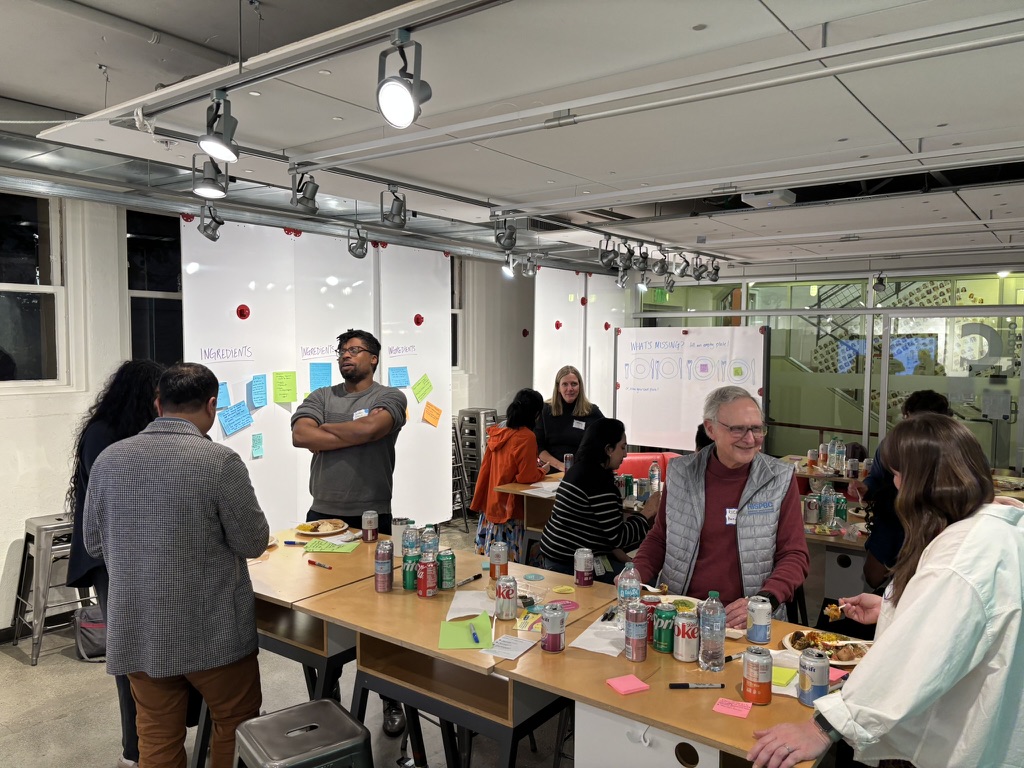
R&Dinner reimagines how we connect as humans by combining the universality of food with a carefully designed facilitation methodology.
The Story
R&Dinner was born from a simple observation: in an increasingly digital world, people still crave genuine human connection. Yet traditional social events rarely move beyond surface-level conversation.
R&Dinner is a structured, facilitated experience that uses the universal language of food to create space for authentic conversation. The five-course methodology—from initial Amuse-Bouche connection through final Dessert commitments—creates a journey from acquaintance to authentic connection.
The methodology has been designed to be replicable, allowing communities to adapt the experience to their unique context while honoring the core facilitation principles that make the experience transformative.
Why Now: The Context
Education R&D is at a critical inflection point. Four major forces are reshaping the landscape:
Funding
ESSER funds clawed back and ending, SLDS support contract revoked, state-level grants in jeopardy.
Government
Reduction in Force (RIF) of USDOE, reduced role of federal government in education.
Artificial Intelligence
AI explosion with very limited R&D, reflecting limited funding of education R&D compared to other sectors.
Personnel
Declining enrollment combined with increasing educator shortages.
Signals of Change
Values-Driven Ed
- Chronic student absenteeism post COVID
- Americans' satisfaction hits 24-year low with public schools
Ideas & Infrastructure
- Public school enrollment continues to decline
- Innovation networks at state and regional levels
- Discussion of block grants to states
Technology
- Low student graduation rates, declining engagement
- More learning options available and accessible
Our Core Values
Authentic Connection
We believe genuine relationships form when people feel safe to be vulnerable and are truly heard by others.
Inclusive Community
Every person's voice matters. We create spaces where all perspectives are welcome and valued.
Collective Wisdom
Communities are stronger when we learn from each other's experiences and support one another.
Our Facilitation Philosophy
R&Dinner is built on several key principles that distinguish it from other community gathering events:
Progressive Vulnerability
We don't ask for deep sharing right away. Each course builds on the previous one, allowing participants to gradually open up as trust is established.
Structured Freedom
While we provide a clear structure and discussion prompts, facilitators create space for organic conversation to emerge within that container.
Active Listening Practice
Participants explicitly practice listening skills, which transforms not just this dinner, but how they engage with others in life.
Commitment & Continuity
The event ends with personal and collective commitments, helping connections formed during the dinner extend beyond one evening.
What We Learned
Five key themes emerged from R&Dinner conversations about where the education R&D ecosystem should focus:
- 1
Learner Agency as Infrastructure
Learner agency was consistently named as foundational—not just a nice-to-have but as the starting point for everything else. Participants challenged the assumption that agency is an add-on or enrichment activity. Instead, agency should be treated as systemic, embedded in how schools operate. The question becomes: How do we build learner agency into every structure, from class schedules to community partnerships?
- 2
Making Learning Visible, Portable, and Actionable
Multiple voices raised the challenge of learning remaining invisible—trapped in transcripts or scattered across platforms. There's energy around building infrastructure that allows learning to travel with learners across time and context. This is not just about digital tools; it's about a shift in power—giving students agency over their own documentation and narrative.
- 3
Technology With Intention
Participants expressed fatigue with the hype cycle around technology, particularly AI. There was a strong call for disciplined, evidence-based integration that serves learners—not novelty for novelty’s sake. The conversation pushed back on the tendency to chase every new tool. Instead, the focus should be on systems that are deeply learner-centered and equity-aware.
- 4
Systems Change for Relationship-Centered Learning
Relationships kept emerging as central—not just between students and teachers, but among teachers, families, and community partners. Building these relationships requires policy and practice changes that prioritize quality instruction and relational trust. Participants emphasized the need to look at what's driving improvement systemically, not just at the surface.
- 5
Equity, Identity, and Who Gets Left Out
Participants named important blind spots: much of education innovation still centers a mainstream, white, suburban focus. Rural communities, students with disabilities, and multilingual learners remain afterthoughts. There was strong agreement that innovation must be grounded in the communities it serves—not imposed from outside.
Who Made This Possible
Event Organizers
R&Dinner was co-created and organized by:
- Sunanna Chand (Reinvention Lab @ Teach For America)
- Devin Vodicka (Learner-Centered Collaborative)
- Peggy Yin (Stanford PhD Student, Department of Psychology)
Partners & Sponsors
We're grateful for the support that made this event possible:
Host & Sponsor
- Stanford d.school for hosting the event
- Schwab Foundation for sponsoring the event
Partner Organizations
- Learner-Centered Collaborative
- Reinvention Lab @ Teach For America
Ready to Host Your Own Event?
Join our growing community of facilitators and create meaningful connections in your city.